Photographing the Moon on Film
Your first photo of the moon with a film camera, a tripod and one simple rule of thumb.
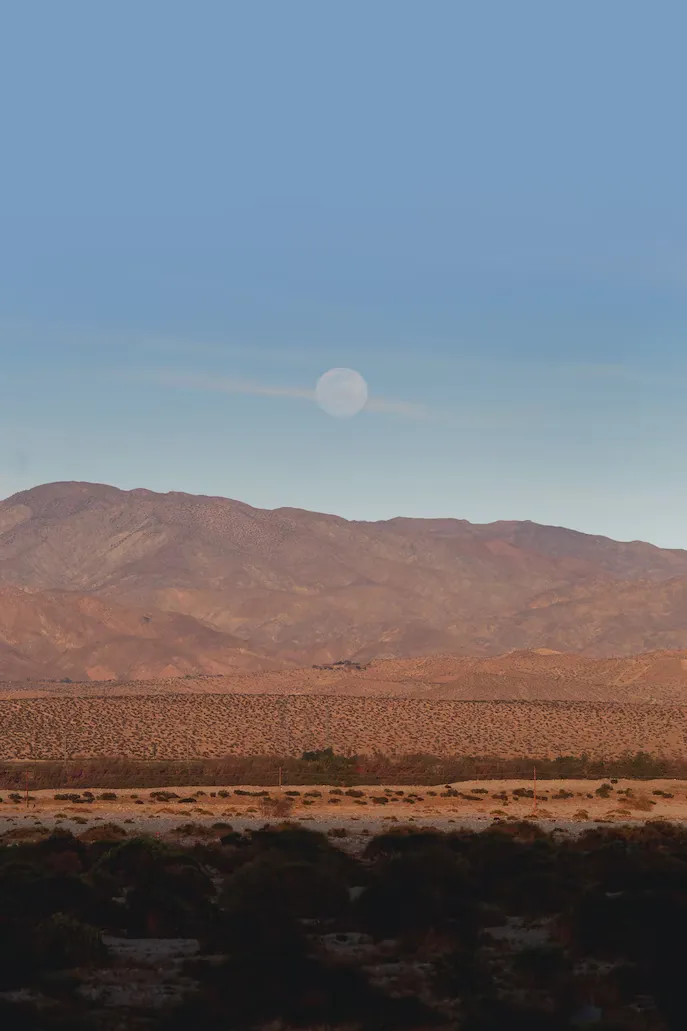
Shooting film at night can feel intimidating: no screen, no instant feedback. For the moon, though, there is a surprisingly reliable rule of thumb.
The “Looney 11” rule
The full moon is lit by the sun – so it is much brighter than you think. That is why:
Aperture f/11, shutter speed 1 / ISO.
With an ISO 400 film that means f/11 and 1/400 s (or the closest available speed, here 1/500 s). For a half or crescent moon, open up by one or two stops.
Equipment
- Telephoto lens: With a 50 mm lens the moon is just a small dot. From 200 mm onwards it gets interesting.
- Tripod: Helps you get sharp images even at short shutter speeds.
- Cable release: Prevents camera shake when you press the shutter.
Moon and landscape
Often more exciting than the moon on its own is the moon above a scene, such as a coastline or a village. Twilight (the “blue hour”) is ideal: the sky is not yet black, and you can capture both the foreground and the moon in a single exposure.
For really dark night scenes you need Bulb mode (B) – the shutter stays open as long as the button is pressed. Cameras like the Minolta X-500 have it, and with a lockable cable release, exposures of several seconds or minutes are possible.
Getting the film developed
A tip for the lab: with night shots, let them know that there are very dark frames on the roll – otherwise they sometimes get missed when the negatives are cut.