Planning for the Perseids
The most reliable meteor shower of the year: when, where and how to see it – and photograph it.
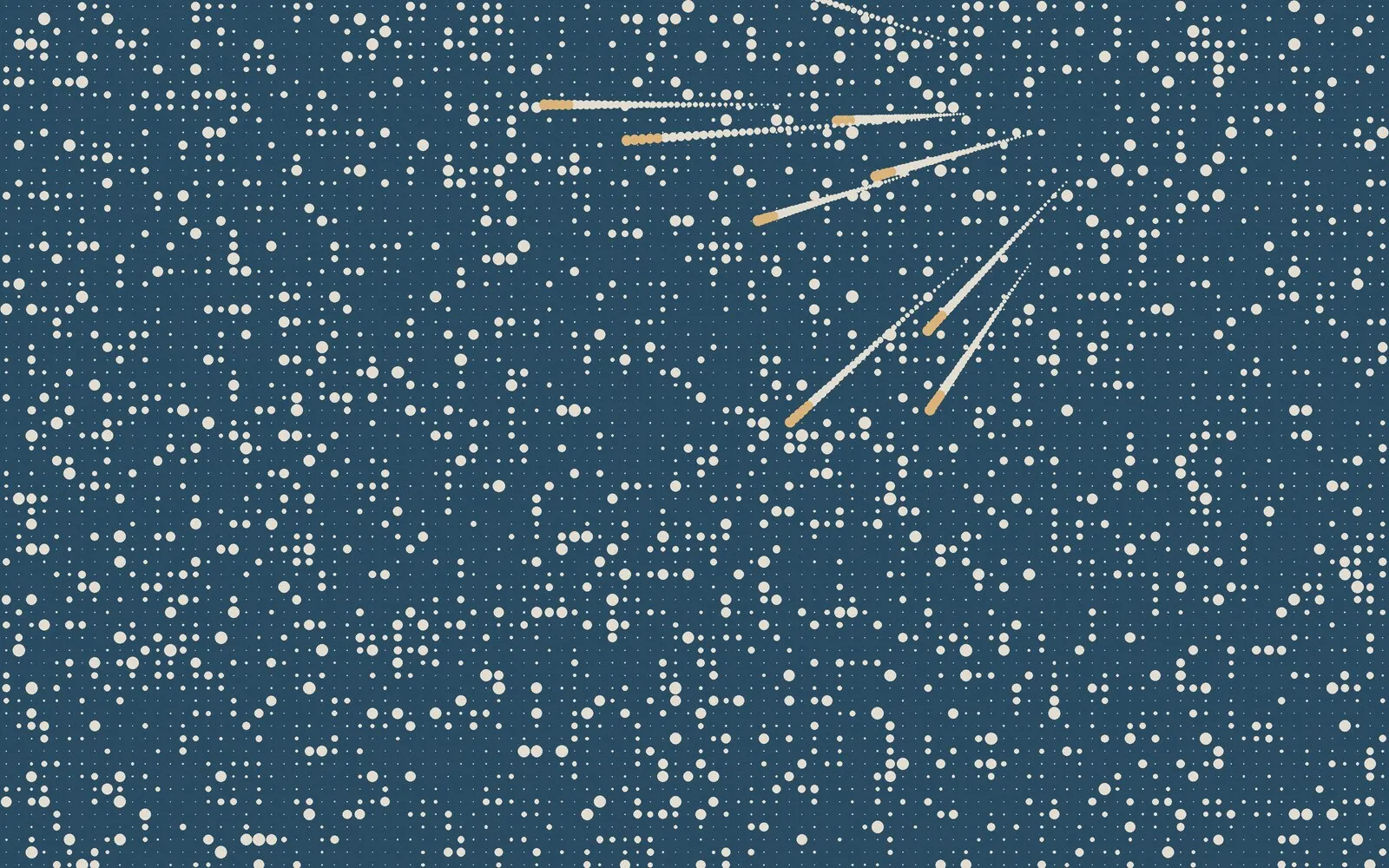
Every August people everywhere lie down on meadows and rooftops and look up. The Perseids are the best-known meteor shower of the year – and one of the most rewarding, because they fall on warm summer nights.
Where the shooting stars come from
Every year around this time the Earth passes through the dust trail of comet 109P/Swift-Tuttle. The tiny particles hit the atmosphere at high speed and burn up. Because all the trails seem to come from one point in the constellation Perseus – the radiant – the shower bears its name.
When to look
- The Perseids are active from roughly mid-July to the end of August.
- The peak is around 12 and 13 August. Under ideal conditions up to about a hundred meteors an hour are possible – in practice you’ll usually see far fewer, but still plenty.
- The second half of the night is best: the radiant is higher, and you’re looking “forward” in the direction the Earth is travelling.
The moon has a say
A bright moon swallows the faint meteors. Before you plan, check the night sky widget on the homepage: if the moon is near full in mid-August, the early morning hours after moonset are often the best time.
Where to look
As dark as possible – city light is the biggest enemy. Some ideas near Barcelona are in Dark places around Barcelona. A clear view to the northeast is nice but not essential: meteors appear all over the sky.
Without a camera
- Lie down instead of standing – a sleeping mat or deckchair saves your neck.
- Wait 20 minutes for your eyes to adapt to the dark, and don’t look at your phone in that time.
- Bring warm clothes. Even August nights get cool in the countryside.
With a camera
Photographing meteors is mostly a game of patience:
- Wide angle (14–24 mm) and the widest aperture that’s still sharp enough.
- Don’t point straight at the radiant, but about 40–60° away – the trails are longer there.
- Digital: high ISO, exposures of 15–25 seconds, then string frames together for hours with an intervalometer. A few hits will be in there.
- On film: load fast film, expose for several minutes in Bulb mode and hope. The stars turn into trails; a meteor crosses them as a bright straight line. More on that in The Milky Way on film.
And then: let the camera run, lie back, look. The best Perseids never land on the sensor anyway.